No WiFi-Antistress Relax toys
- 4.6
- Rating
- 50.00M
- Installs
- Free
- Price

 Analysis by App-foxy
I usually reach for a casual game when I want a short break rather than a serious challenge, and No WiFi-Antistress Relax toys fits that mood unusually well. It is a collection of small, touch-focused activities from QY Studio, built around quick interaction, simple puzzles, and relaxing play. I found the appeal less in beating a difficult level and more in having something immediately available when I need to occupy my hands for a few minutes.
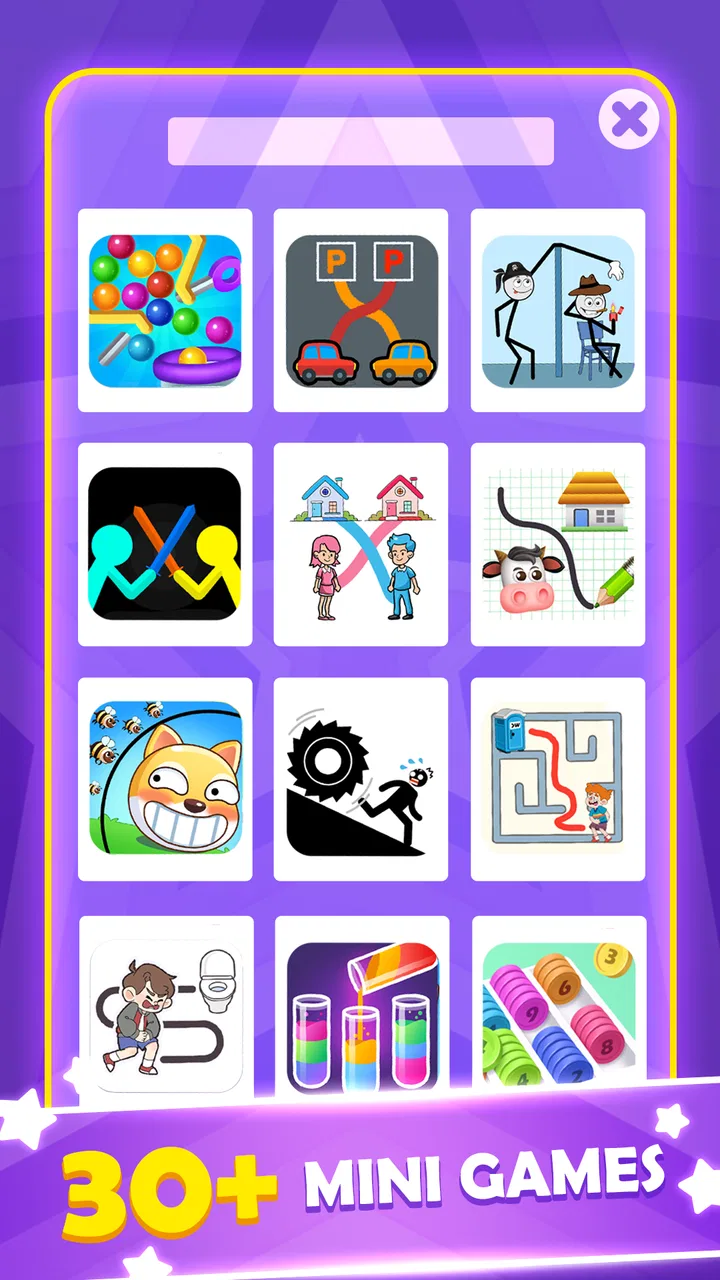
The game is free, rated for Everyone, and works without Wi-Fi, which makes it easy to keep around for travel, waiting rooms, or those awkward gaps between tasks. Its store summary points to more than thirty mini puzzle games, arcade-style moments, and draw-line challenges. That combination gives it more variety than a single-purpose fidget app, although it also means the experience depends heavily on which activities you personally enjoy.
How the game feels in everyday use
I find the easiest way to judge this collection is to give it a tiny, specific job: fill a quiet minute without demanding a full gaming session. That keeps the first try relaxed, and it also helps me notice which kind of interaction actually suits my mood. From there, I can choose whether to keep exploring the mini-games or reach for a more focused alternative.
You May Also Like

 Blood Strike: 2.5 Anniversary
Blood Strike’s Loadouts Turn Every Drop Into a Tactical Gamble
A close look at Blood Strike’s custom loadouts: how fast access to signature weapons reshapes its battle royale rhythm, rewards preparation, and narrows the gap between fights.

 Pandora - Music & Podcasts
Pandora’s Music Is Easy to Start, but Harder to Recover
Pandora’s strength is its low-effort path from a seed to a station. Its weak spot is how much confidence it asks you to place in connection, setup, and quiet recovery.

 8 Ball Pool
 Is Built on Rivalries, Rematches, and Routine
A close look at the rivalries, rematches, shared routines, and unanswered safety questions that turn a quick pool match into a persistent mobile community.

 Samsung Music
’s Quiet Strength Is Playing What You Already Own
Its reach comes less from spectacle than from dependable access to a personal library. That simplicity is both the app’s strongest retention engine and its ceiling.

 AccuWeather: Weather Radar
AccuWeather Review: A Quick, Clear Forecast for Everyday Decisions
For everyday plans, the best forecast is the one you can understand quickly. AccuWeather makes rain timing, radar, and local conditions easy to act on, with a few trade-offs.

 Hill Climb Racing
Why Hill Climb Racing Still Turns Crashes Into One More Run
A tiny car, a bumpy hill and one more upgrade: Hill Climb Racing keeps resurfacing because its simple chaos makes every near-miss feel personal.
More From Our News Desk
View All News


Fast access matters more than visual ambition
The first thing I noticed is that this is designed around low commitment. You do not need to prepare for a long session or learn a complicated control scheme. The basic idea is to open the game, choose a small activity, and start interacting. That makes the perceived speed of the app important: a relaxing toy loses much of its value if reaching the toy feels like work.
In practical terms, I would treat it as a pocket distraction rather than a traditional campaign game. It suits a coffee break, a short commute without a connection, or the few minutes before an appointment. The no-Wi-Fi positioning is especially useful because it removes one common source of friction for casual games. You can use it in airplane mode or in places where mobile coverage is unreliable, without planning a session around connectivity.
The variety also changes how quickly the game feels fresh. If one puzzle does not appeal to me, I can move to another kind of interaction instead of abandoning the whole app. That is a better arrangement than a single repetitive fidget toy, but it is not the same as having a carefully paced adventure. The activities are there for immediate relief, not for a long narrative arc or a deep progression system.
What happens during a longer session
Short play is where the design makes the most sense. During a longer session, I started judging the collection less as one game and more as a tray of small diversions. That can be a strength when I want to switch moods, but it can also make the experience feel uneven. Some mini-games may hold my attention for a while, while others work better as a quick reset before I move on.
A useful way to approach it is to avoid forcing every activity to become a favorite. I would sample several options, remember the ones that feel satisfying, and return to those when I need a break. This is one of the more practical insights about the app: its value comes from choosing the right small activity for your current mood, not from completing the entire collection in order.
For example, I might use a draw-line challenge when I want a task that requires a little concentration, then switch to a simpler antistress interaction when I feel mentally tired. That change of intensity is more helpful than staying with one activity that has stopped being enjoyable. The game works best when I treat it like a menu rather than a single uninterrupted experience.
Reliability and recovery between sessions
Because the game is designed for quick visits, reliability matters in a very ordinary way. I want to be able to return to it without needing an account ritual, a network connection, or a large amount of preparation. Its offline focus gives it a clear advantage over casual games that depend on online services for their basic loop.
That does not mean every session will feel equally smooth on every device. Performance can vary with the phone or tablet, the operating system, available storage, and what else is running in the background. I would not promise identical behavior across all hardware. Still, the type of game is reassuring: small, self-contained activities generally place a simpler demand on a device than a large three-dimensional action game.
Recovery is also part of the experience. If I leave after a short break, I am not emotionally invested in preserving a long competitive run. That makes interruptions less frustrating. This is a meaningful difference from puzzle games that punish you for stepping away or from arcade titles built around maintaining a high score. Here, the main purpose is to resume a pleasant distraction, not protect a major achievement.
Device limits and what to expect
The game supports Android devices running version 7.0 or later. That gives it a broad potential audience, including people using older phones that may not handle demanding modern games comfortably. The age rating of Everyone also makes its tone approachable for a wide range of users, though adults looking for sophisticated strategy should keep their expectations realistic.
Older hardware can still introduce practical limitations. A device with little free space, many background apps, or an aging battery may make any game feel less responsive. I would close unnecessary apps before a longer session, especially if the phone already feels warm or sluggish. That is not a special requirement for this title; it is simply the sensible way to get a steadier experience from a modest casual game.
Resource demands are difficult to judge from the category alone, so I would avoid assuming that every phone will behave identically. My recommendation is to test it during the kind of short session you actually expect to have. If menus respond promptly and transitions do not interrupt your rhythm, it is doing its job. If your device struggles, the problem may be the combination of hardware age and background load rather than the concept of the game itself.
Where it differs from familiar alternatives
The closest alternatives are ordinary puzzle games, dedicated relaxation apps, and simple offline arcade titles. A conventional puzzle game usually offers a clearer progression path and a stronger reason to keep returning. A dedicated relaxation app may feel calmer and more focused, but it can become repetitive once you have exhausted its small set of interactions. An arcade game may provide better score-chasing excitement, yet it often asks for faster reactions and more concentration.
No WiFi-Antistress Relax toys sits between those options. It gives me more playful variety than a single relaxation toy, while asking less commitment than a level-based puzzle game. The trade-off is depth. I would not choose it when I want carefully balanced stages, a story, competitive rankings, or a long-term mastery challenge. I would choose it when I want to decide my level of involvement from one minute to the next.
The draw-line activities are a particularly useful middle ground. They can occupy my attention without demanding the speed of a typical arcade session. I can slow down, try again, and use the task as a small concentration exercise. That makes the collection more flexible than its short description might suggest, especially for people who want something interactive but not intense.
Practical ways to get more from the collection
My first tip is to use the game according to energy level. When I am restless, I prefer an activity with a clear physical action. When I am mentally overloaded, I look for something simpler and avoid turning the break into another problem-solving task. This sounds obvious, but it prevents the common mistake of choosing a demanding mini-game when the real goal is to calm down.
My second tip is to use it as a transition tool rather than a reward that expands indefinitely. I might play briefly after finishing a task, then stop before the break becomes another source of delay. Since the activities are easy to start, setting a personal stopping point is useful. The game does not need to fill an entire evening to be worthwhile.
A third practical approach is to keep it available for offline situations instead of relying on it as your main daily game. Its strongest advantage appears when a connection is inconvenient or unavailable. A downloaded casual collection is more dependable during travel than an online title that cannot reach its service. That makes it a sensible backup, even for someone who already has a favorite puzzle game.
There is also a small psychological trade-off. Switching between many mini-games can refresh attention, but too much switching can make the session feel scattered. I get better results when I stay with one activity long enough to understand whether it is relaxing, then move on deliberately. Randomly tapping through everything may reveal variety, but it does not necessarily create a calmer experience.
Free access and the purchase question
The game is free to download, which makes trying it low risk. It also includes in-app purchases priced at $6.99 per item. That is worth remembering before handing the device to a child or treating the app as completely cost-free. The Everyone rating describes the intended age suitability, but it does not remove the need for ordinary purchase awareness.
I would not make a purchase decision immediately. First, I would see whether the available activities already match my needs and whether I return to the app naturally. If I only use it during occasional offline moments, paying for additional content may not make sense. If I repeatedly use the same collection as a daily relaxation tool, an optional purchase could feel more reasonable, provided the value is clear to me at the moment of purchase.
This is another reason the app is better evaluated as a personal utility than as a standard game. The right question is not whether it can replace a premium puzzle title. The better question is whether having a broad set of small distractions is useful enough in my routine to justify spending beyond the free entry point.
Who should install it, and who should skip it
I would recommend it to someone who wants a casual, offline-friendly collection for short breaks. It is a good match for people who enjoy tactile interactions, simple puzzles, and changing activities without committing to a story. It can also suit families looking for an approachable game with an Everyone content rating, although adults should still manage in-app purchase settings responsibly.
I would be more cautious about recommending it to players who need depth. If you want an elaborate puzzle system, a competitive leaderboard, a narrative campaign, or a precise arcade challenge, a dedicated title in one of those categories will probably serve you better. The collection format is convenient, but convenience is not the same as depth.
I would also skip it if the main goal is guided meditation or structured stress management. The antistress label describes the mood of the interactions, not a replacement for a focused wellness program. Someone seeking breathing exercises, long audio sessions, or a carefully sequenced relaxation routine should look elsewhere. This game is interactive distraction, and that distinction matters.
Popularity, maintenance, and current package
QY Studio’s game has reached over fifty million installs and holds a 4.5 average from around fifty-six thousand ratings, so it clearly has broad appeal among casual players. Those figures tell me that the basic idea is easy for many people to understand, though popularity alone does not guarantee that every mini-game will suit my preferences.
The app was released on September 2, 2023, and the current version is 1.78.43. I mention the version because it is useful when troubleshooting or comparing the experience with another device. If someone reports different behavior, checking whether both devices are using the same release is a sensible first step. The game has also accumulated around three hundred written reviews, which gives prospective users additional viewpoints beyond the headline rating.
What matters most in daily use is that the collection remains easy to approach. A casual game can become less attractive when updates, sign-ins, or online requirements dominate the experience. Its offline identity is therefore not just a convenience; it is part of the reason to choose it over more elaborate alternatives. The strongest feature is the freedom to take a small break without turning that break into a project.
My performance verdict
After looking at speed expectations, longer sessions, reliability, and device constraints, I see No WiFi-Antistress Relax toys as a lightweight companion rather than a game I would build my whole leisure time around. Its broad collection gives it more staying power than one repetitive toy, while its simple casual structure keeps the barrier to entry low.
The best experience comes from using it in short, intentional bursts: waiting for transport, taking a pause between chores, or needing an offline distraction. I would keep a few favorite mini-games in mind, switch activities when the mood changes, and avoid expecting a deep progression system. That approach makes the variety feel useful instead of random.
My final recommendation is positive for the right audience. If you want offline casual entertainment with a relaxing, low-pressure feel, this free game is worth trying, especially on an Android device running 7.0 or later. If you want demanding challenges, a polished long-form journey, or a structured wellness tool, choose a more specialized alternative. For me, its value is straightforward: it is a convenient collection of small interactions that can make an empty few minutes feel less empty without requiring a connection or a serious commitment.
FAQs for No WiFi-Antistress Relax toys
01What is No WiFi-Antistress Relax toys, and how does it work?
No WiFi-Antistress Relax toys is a mobile app designed to help users unwind and relieve stress through interactive and calming activities. The app offers a variety of virtual toys and stress-relief games that can be played without an internet connection, making it accessible anytime and anywhere for a quick relaxation session.
02Do I need an internet connection to use the app?
No, the app is designed to function entirely offline. This means you can enjoy all the stress-relief features without needing a WiFi connection or mobile data. It’s perfect for situations where internet access is limited or non-existent, allowing you to relax without any connectivity concerns.
03What types of relaxation activities are included in the app?
The app includes a range of activities designed to soothe and calm the mind. Users can engage with digital stress balls, bubble wrap popping, sand drawing, and more. Each activity is crafted to provide a sensory experience that helps reduce anxiety and promote mental relaxation.
04Is the app suitable for all age groups?
Yes, No WiFi-Antistress Relax toys is suitable for users of all ages. It provides a family-friendly environment with activities that are easy to understand and use. Whether you're a child or an adult, the app offers a variety of soothing options to help manage stress effectively.
05Are there any in-app purchases or ads in the app?
The app offers a free basic version with a selection of activities. However, there might be optional in-app purchases available to unlock additional features or remove ads. Users can choose to enjoy the free version or enhance their experience with these optional purchases.
Pros
- Wide variety of relaxing toys.
- No internet connection needed.
- Simple and intuitive interface.
- Helps reduce stress effectively.
- Visually pleasing graphics.
Cons
- Limited customization options.
- Ads can be intrusive at times.
- No multiplayer features.
- Lacks frequent updates.
- Some toys feel repetitive.

No WiFi-Antistress Relax toys
Gallery